Multi-Axis Welding Robots: Adoption Trends in the Shipbuilding Sector
Cost-Effectiveness of Multi-Axis Welding Robots
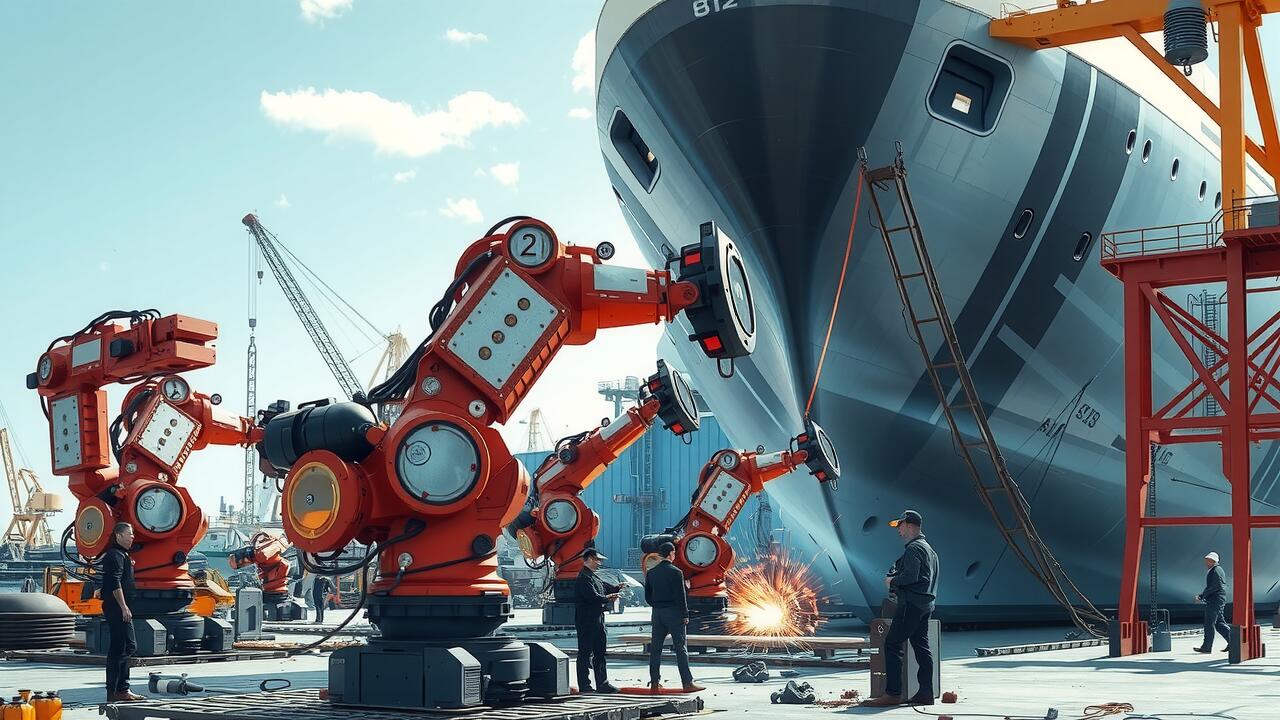
Investing in multi-axis welding robots offers significant cost advantages that can enhance operational efficiency within the shipbuilding sector. For example, a recent study indicated that companies implementing mechanized welding solutions reported a decrease in production costs by up to 30%. Such reductions are attributed to increased precision and lower material waste compared to traditional methods. Furthermore, the robots' ability to operate consistently over long hours maximizes throughput, leading to faster project completion and improved cash flow.
The initial costs associated with acquiring and integrating these robotic systems can be considerable. However, when assessing the total cost of ownership, organizations often find that savings accrued from reduced labor costs and minimized rework offset the upfront investment within an estimated three to five years. A leading shipyard that adopted multi-axis welding reported a return on investment (ROI) of over 150% within this timeframe. Emphasizing the importance of adopting mechanized welding techniques can help shipbuilders remain competitive by addressing both efficiency and budget constraints effectively.
Why Does Initial Investment Matter for Long-Term Profitability?
Initial investments in multi-axis welding robots significantly impact long-term profitability for shipbuilding companies. The upfront costs can be substantial, often exceeding six figures, but the long-term savings and efficiency gains justify this expenditure. For example, a shipyard that adopted mechanized welding solutions reported a 30% reduction in labor costs and a 25% increase in production speed within the first year. Over time, these gains translate into a more favorable return on investment, making the initial financial commitment an essential strategic decision.
Evaluating scalability and operational efficiency is critical when considering these systems. As robotic technologies advance, their capabilities expand, allowing for greater complexity in welding applications. A shipbuilding firm that integrates automation can streamline processes, reduce rework, and enhance quality control. Industry regulations increasingly favor automated methods, as robotic solutions can better comply with stringent safety and quality standards. By planning for future growth and adopting mechanized welding methods early, companies position themselves to leverage reduced operational costs while improving output consistency and reliability.
Training and Skill Development for Workforce Transition
The transition to mechanized welding solutions requires a strategic investment in workforce training and skill development. Companies adopting multi-axis welding robots must ensure that their workforce is equipped with the technical expertise needed to operate and maintain such advanced systems. A study conducted by the American Welding Society highlights that more than 60% of manufacturers recognize a critical skills gap when it comes to operating robotic systems. Addressing this gap necessitates tailored training programs that focus not only on the technical aspects of mechanized welding but also on understanding robotic programming and troubleshooting.
Industry leaders have started to implement comprehensive training initiatives that blend theoretical knowledge with hands-on experience. For instance, a prominent shipyard in the Gulf Coast reported a 30% increase in efficiency after introducing a certification program focused on advanced welding technology for its employees. These programs foster familiarity with the latest software and hardware related to multi-axis welding operations. As a measurable outcome, companies experience lower downtime and improved safety standards when their workforce is adept in manipulating robotic welding equipment. Investing in such targeted training allows organizations to future-proof their operations in a competitive market.
Essential Skills for Operating Multi-Axis Welding Systems
Operating multi-axis welding systems requires a robust skill set underpinned by technical knowledge and hands-on experience. Professionals must possess a deep understanding of mechanized welding principles, including the specific capabilities and limitations of the robotic systems in use. For instance, familiarity with G-code programming can significantly streamline tasks, enabling precise control of the welding process. Additionally, knowledge of material properties and welding consumables plays a crucial role in ensuring optimal results. As such, training programs should emphasize real-world scenarios where candidates can develop both technical competencies and troubleshooting skills.
Adaptability is essential in navigating the complexities of multi-axis welding operations. Welding technicians must be proficient in operating multiple robotic arms simultaneously, which requires a keen ability to monitor various parameters such as temperature, voltage, and travel speed in real-time. Implementing standardized operating procedures that align with industry best practices can enhance efficiency and reduce the risk of defects. Continuous training and certification programs help technicians stay current with emerging technologies and innovative mechanized welding solutions, ultimately contributing to improved productivity and quality assurance within the shipbuilding sector.
Maintenance Considerations for Multi-Axis Welding Equipment
Regular maintenance is crucial for prolonging the lifespan of multi-axis welding robots. These mechanized welding systems require routine inspections to ensure optimal performance. For example, maintaining precise calibration of the welding arms can significantly reduce errors, leading to a potential decrease in rework by up to 30%. Industry standards recommend performing preventative maintenance every 1,000 operational hours or quarterly, whichever comes first. This proactive approach minimizes downtime and enhances productivity, making a solid case for integrating structured maintenance schedules into any shipbuilding project.
Additionally, the use of sophisticated monitoring tools can facilitate effective maintenance management. For instance, employing data analytics to identify wear and tear patterns allows for timely interventions, preventing unexpected breakdowns. Workforce training on these maintenance protocols enhances skill sets, preparing teams to handle basic repairs on-site. Implementation of a tiered maintenance plan that distinguishes between daily, weekly, and monthly tasks can further streamline operations. Such systematic attention not only improves the reliability of the mechanized welding solutions but also reinforces the overall quality of the welding processes.
How Can Regular Maintenance Improve Equipment Lifespan?
Regular maintenance significantly enhances the lifespan of multi-axis welding robots by ensuring optimal performance and preventing unexpected failures. For instance, adhering to proactive servicing schedules can reduce downtime by up to 30%, allowing shipbuilders to maintain continuous production flows. Scheduled inspections typically involve checking calibrations, software updates, and examining mechanical components for wear and tear. These practices help identify potential issues early, allowing for timely interventions that can mitigate costly repairs and extend the operational life of the equipment.
Implementing a systematic maintenance plan not only supports equipment longevity but also optimizes the overall efficiency of mechanized welding solutions. For example, consistent monitoring and adjustment of welding parameters can lead to a 20% improvement in bead consistency, which is critical for maintaining structural integrity in shipbuilding. Utilizing specialized diagnostic tools and methodology endorsed by industry standards, such as those from the American Welding Society, aids in maintaining precise operational conditions. A well-maintained robotic welding system can deliver higher productivity levels, positively impacting the cost-efficiency of projects over time.
| Maintenance Activity | Frequency | Benefits |
|---|---|---|
| Calibration Checks | Monthly | Ensures precision in welding operations, reducing scrap rates. |
| Software Updates | Quarterly | Improves functionality and introduces new features for better performance. |
| Mechanical Inspections | Biannually | Identifies wear and tear early to prevent major breakdowns. |
| Parameter Adjustments | Weekly | Enhances bead consistency and quality, crucial for structural integrity. |
Comparison of Traditional vs. Robotic Welding Methods
Traditional welding methods, often reliant on human skill and experience, can face significant limitations in process consistency and speed. For instance, a manual welder may take hours to complete a complex seam, with the potential for human error affecting quality. In contrast, mechanized welding solutions automate many aspects of the welding process, achieving remarkable precision and reducing cycle times considerably. A study published by the American Welding Society indicates that robotic welding can improve productivity by up to 30% when employed in shipbuilding projects, leading to enhanced throughput and efficiency.
The differences also extend to health and safety considerations. Manual welders are often exposed to hazardous fumes and intense heat, necessitating stringent safety protocols and protective gear. Robotic systems, however, operate within controlled environments, significantly minimizing worker exposure to these dangers. Additionally, the integration of advanced technologies such as artificial intelligence in robotic welding allows for real-time adjustments and monitoring, further ensuring quality output. Adopting these mechanized welding systems not only optimizes production rates but also enhances worker safety metrics across the shipbuilding sector.
What Are the Key Differences in Process and Output?
The shift from traditional welding methods to mechanized welding offers significant advantages in terms of precision and repeatability. For instance, robotic systems utilize advanced algorithms and sensors to adjust the welding process in real-time, ensuring a consistent output that reduces the likelihood of defects. Statistical process control (SPC) in robotic welding facilitates tracking of variables such as temperature and feed rate, allowing for instantaneous adjustments that traditional methods simply cannot offer. As a result, shipyards employing mechanized welding solutions can achieve weld strength consistently above industry standards, effectively reducing failure rates during inspections.
Moreover, traditional welding often involves extensive manual labor, leading to variability in quality and productivity. In contrast, automated systems operate continuously, maintaining high production rates that can exceed manual welding outputs by 20 to 40 percent. For example, a case study in a major shipbuilding facility demonstrated that transitioning to robotic welding reduced production time by 30% on average, while also minimizing rework costs. The efficiency gained through mechanized processes translates into shorter project timelines, enabling shipbuilders to meet client deadlines more effectively and optimize resource allocation.
Conclusion
The integration of multi-axis welding robots in shipbuilding represents a significant shift toward efficiency and precision in mechanized welding. Data from recent industry assessments indicates that companies adopting these advanced automated systems have realized productivity increases of up to 30%. For example, a leading shipyard reported a 25% reduction in production time and lower material waste, highlighting the financial advantages associated with transitioning to mechanized welding solutions.
Investment in training for the workforce enhances the successful deployment of these systems. Ensuring that employees are well-versed in operating multi-axis welding technologies not only mitigates the learning curve but also improves operational safety and reduces downtime. A structured training program that covers both the technical and practical aspects of robotic systems is essential. This fosters a workforce capable of maximizing the potential of mechanized welding, ultimately supporting long-term profitability and competitiveness in the market.